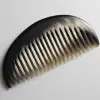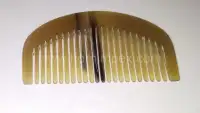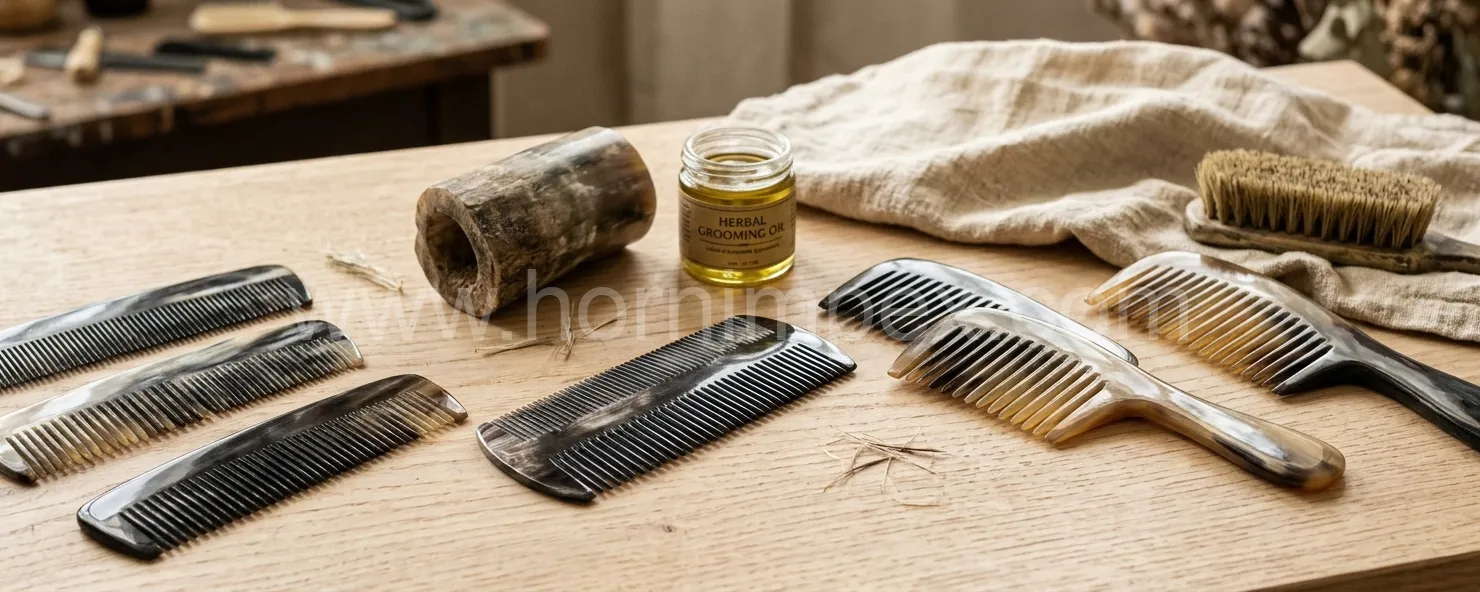
A comb may be a small grooming accessory, but its material, shape and finishing can make a noticeable difference to the everyday grooming experience.
Plastic combs are widely available, but buyers interested in natural materials, traditional craftsmanship and distinctive accessories often consider buffalo horn combs as an alternative.
Made from naturally occurring horn material, these combs have individual colour patterns, variations in texture and a distinctive appearance. Their appeal comes from the combination of practical grooming use and traditional material craftsmanship.
However, not every buffalo horn comb offers the same level of quality. Tooth spacing, polished edges, material consistency and overall construction should all be considered before purchasing one.
Understanding these details is particularly important for consumers buying a comb for personal use and businesses sourcing products for retail collections.
This guide explains how to choose a buffalo horn comb, what makes a well-finished comb, which designs suit different grooming requirements and how to maintain the product properly.
A buffalo horn comb is a grooming accessory manufactured using natural buffalo horn.
Buffalo horn is primarily composed of keratin, a structural protein also found in human hair and fingernails. The material can be processed into different shapes and thicknesses, allowing craftspeople to create functional grooming accessories.
Unlike mass-produced combs made from moulded plastic, natural horn combs can display individual patterns and colour variations.
Common visual characteristics include:
Deep black and dark brown shades.
Brown and amber colour combinations.
Natural streaks and tonal variations.
Slightly translucent areas in some lighter sections.
Distinctive grain-like patterns.
These characteristics depend on the original horn material and the way it is selected and processed.
A natural buffalo horn comb is therefore not necessarily identical to another comb of the same design.
The manufacturing process generally involves selecting suitable material, cutting the required shape, forming the teeth, smoothing the edges, sanding and polishing the surface.
The quality of these finishing stages is particularly important because a grooming comb must move through hair comfortably without rough edges or sharp teeth.
For an overview of HornImpex's available designs, explore its handmade buffalo horn comb collection .
Buffalo horn combs appeal to consumers who appreciate natural materials and handcrafted grooming accessories.
However, their advantages should be understood realistically rather than treating them as a solution to every hair-care problem.
One of the most recognisable features of buffalo horn is its natural appearance.
Unlike uniformly coloured synthetic materials, horn can display different shades, streaks and patterns.
This makes each finished comb visually distinctive.
For consumers who appreciate handcrafted accessories, these natural variations can be an important part of the product's appeal.
A properly shaped and polished buffalo horn comb should have smooth teeth and rounded, comfortable edges.
Surface finishing is important because rough teeth can catch hair and make grooming uncomfortable.
A well-finished comb can provide a pleasant grooming experience, although actual performance depends on the quality of manufacturing and the condition of the hair.
Static electricity can contribute to flyaway hair, particularly in dry environments.
Natural horn combs are often selected as alternatives to conventional plastic combs because users may find that they generate less static during grooming.
However, results depend on several factors, including hair condition, humidity, comb construction and the surrounding environment.
It would be inaccurate to guarantee that every buffalo horn comb eliminates static or prevents frizz.
Buffalo horn has a long history of use in decorative and functional crafts.
Its ability to be shaped, smoothed and polished makes it suitable for products such as combs, buttons, jewellery and other accessories.
A buffalo horn comb brings this traditional material into an everyday grooming application.
Natural horn does not have a completely uniform appearance.
Two combs made from similar material may differ in colour, pattern and visible markings.
For buyers who appreciate individual natural characteristics, this variation can make the product more interesting than a completely uniform synthetic accessory.
The best comb design depends on how it will be used.
A comb intended for everyday hair grooming may require different tooth spacing and dimensions from one designed specifically for beard grooming.
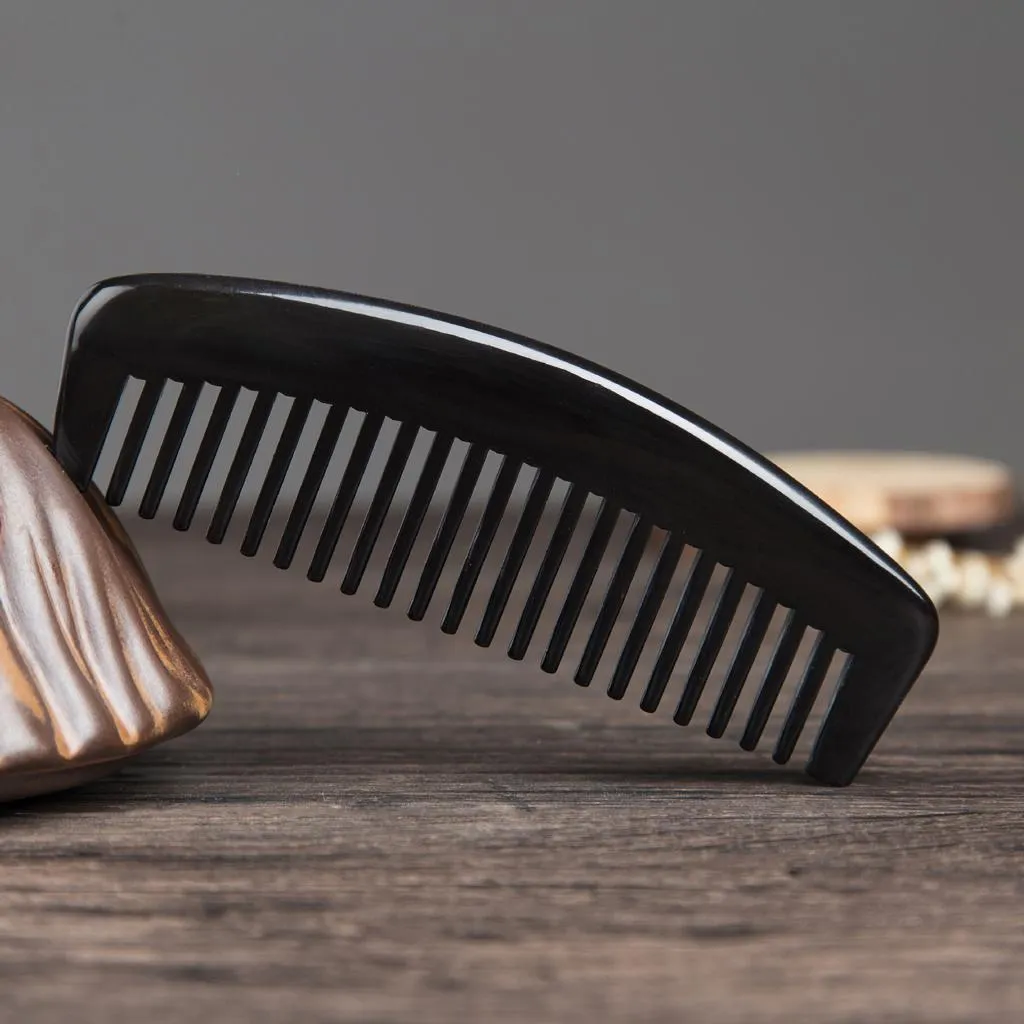
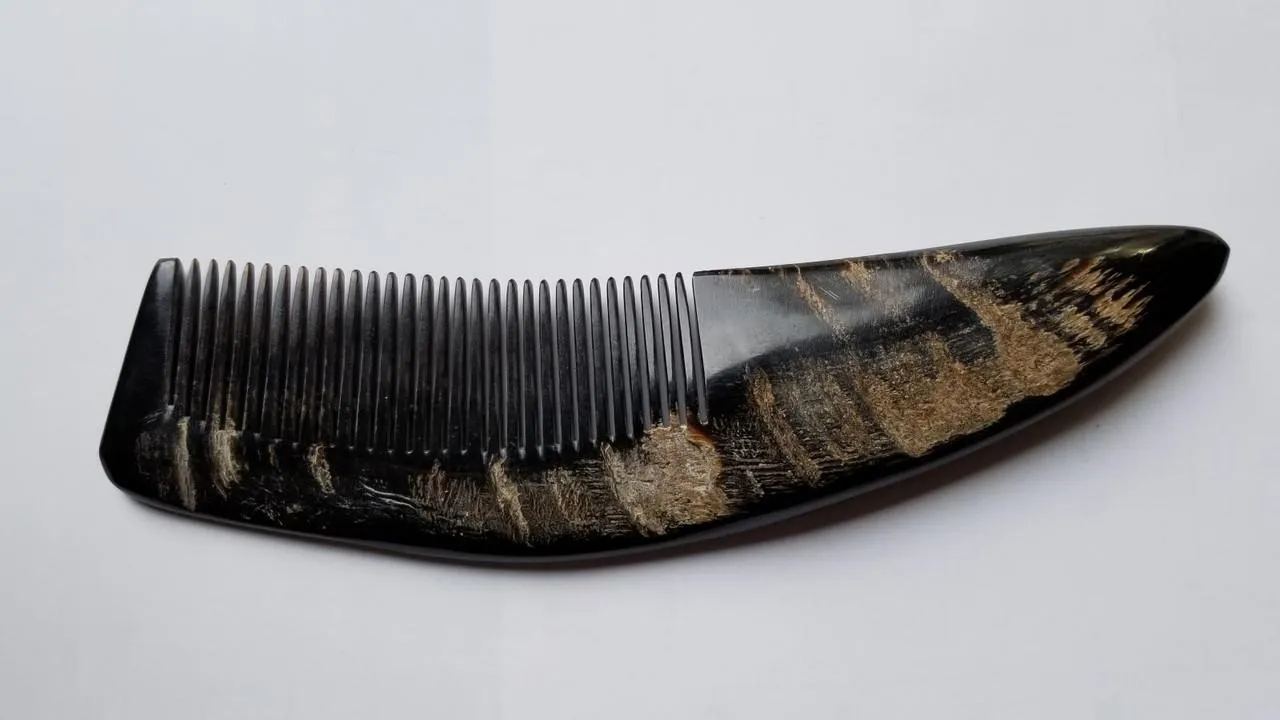
Fine-tooth combs feature closely spaced teeth.
They are commonly selected for:
Neat everyday grooming.
Arranging shorter hairstyles.
Creating defined hair sections.
Finishing and tidying hairstyles.
The teeth should be smooth and evenly formed.
Very closely spaced teeth may not be suitable for thick, tightly curled or heavily tangled hair because they can create unnecessary pulling.
Wide-tooth combs have larger spaces between individual teeth.
They can be useful for:
Managing thicker hair.
Working through loose tangles.
Grooming longer hairstyles.
General detangling when used gently.
Their wider spacing allows more room for hair to pass between the teeth.
A wide-tooth design is often a sensible starting point for people who prefer a less restrictive combing experience.
Beard combs are generally smaller and designed for facial hair grooming.
Their practical applications include:
Arranging beard hair.
Maintaining moustache appearance.
Distributing grooming products when compatible with the material and product-care instructions.
Tidying facial hair throughout the day.
The best design depends on beard length, thickness and personal grooming habits.
Pocket combs are compact accessories designed for portability.
They may suit people who want a grooming tool that fits inside a travel pouch, personal-care kit or everyday bag.
When selecting a pocket comb, consider tooth spacing, overall thickness and whether the design can be stored without damaging the teeth.
Dual-tooth combs feature two different tooth-spacing arrangements on the same accessory.
This provides greater flexibility for users who need both wider spacing and finer grooming in one product.
For example, one side may be used for initial grooming, while the other is used for more detailed finishing.
The actual suitability depends on the dimensions and finishing of each side.
HornImpex's collection includes hair combs, wide-tooth combs, beard combs, dressing combs and other design variations.
Choosing a comb should begin with understanding your grooming requirements.
Hair length, thickness, texture and daily styling habits are more useful selection criteria than appearance alone.
Fine or straight hair may work well with a fine-to-medium-tooth comb, depending on the desired styling result.
Consider:
Closely spaced but smoothly finished teeth.
Comfortable handling.
A suitable comb width.
Rounded tooth tips.
Avoid forcing a fine-tooth comb through tangles.
Thicker hair generally requires more space between comb teeth.
A wide-tooth buffalo horn comb can be a practical option because it provides more room for hair to pass through.
Look for:
Evenly spaced teeth.
A sturdy overall construction.
Smooth edges.
A comfortable grip.
Long hair can become tangled during daily activities.
A wide-tooth comb may be useful for gentle detangling, especially when the hair is divided into manageable sections.
Start near the ends and gradually work towards the roots rather than pulling the comb through the entire length at once.
Curly and textured hair can require more careful detangling.
A wide-tooth comb is generally a more practical starting point than a very fine-tooth design.
However, individual hair routines differ. Some people prefer finger detangling or specialised brushes instead.
The comb should never be forced through resistant knots.
Short hairstyles may benefit from fine-tooth or medium-tooth combs depending on the desired finish.
Compact designs are also useful for daily grooming and travel.
Beard thickness and length influence the appropriate design.
A compact beard comb may suit shorter facial hair, while a wider-tooth option may be more comfortable for longer or denser beards.
| Hair or grooming requirement | Suitable design to consider |
|---|---|
| Fine, straight hair | Fine-to-medium teeth |
| Thick hair | Wide teeth |
| Long hair | Wide-tooth comb |
| Curly or textured hair | Wide-tooth comb |
| Short hairstyles | Fine-to-medium teeth |
| Beard grooming | Dedicated beard comb |
| Travel grooming | Compact pocket comb |
These are general selection guidelines rather than strict rules. Personal preference and the actual dimensions of the comb also matter.
The appearance of a buffalo horn comb can attract attention, but its construction determines whether it is comfortable and practical to use.
Buyers should evaluate the following characteristics.
This is one of the most important quality indicators.
Run your fingers carefully along the comb's teeth and inspect the edges.
A properly finished comb should not have:
Sharp corners.
Rough projections.
Visible splinters.
Jagged edges.
Uneven finishing that catches hair.
The tips should feel comfortable rather than pointed or abrasive.
Check whether the teeth are evenly arranged.
Uneven spacing can affect the grooming experience and may indicate inconsistent manufacturing.
The distance between teeth should also suit the intended application.
A well-polished surface improves the appearance and handling of a natural horn comb.
Look for:
Even finishing.
Smooth surfaces.
No obvious rough patches.
Consistent polishing around the teeth and edges.
A glossy appearance alone does not prove superior quality. The actual finishing matters more than shine.
Material thickness affects the overall appearance, weight and construction of the comb.
A comb should feel appropriately substantial for its intended size and design.
Extremely thin or uneven sections deserve closer inspection, particularly around the teeth and handle.
Natural buffalo horn may contain darker and lighter areas.
These variations are normal characteristics of natural material.
A buyer should not assume that every difference in colour indicates a defect.
Instead, assess whether the material is structurally sound and whether the visible finish meets the required product standard.
Inspect the body and teeth carefully.
Avoid combs with:
Cracks.
Broken teeth.
Deep structural splits.
Roughly repaired sections.
Noticeable damage around the handle.
A natural pattern is different from a structural defect.
The comb should be comfortable to hold and easy to move through hair.
A beautiful design is not necessarily the most practical design.
For daily use, ergonomics and tooth arrangement should take priority over decorative appearance.
Both materials have practical applications, but they offer different characteristics.
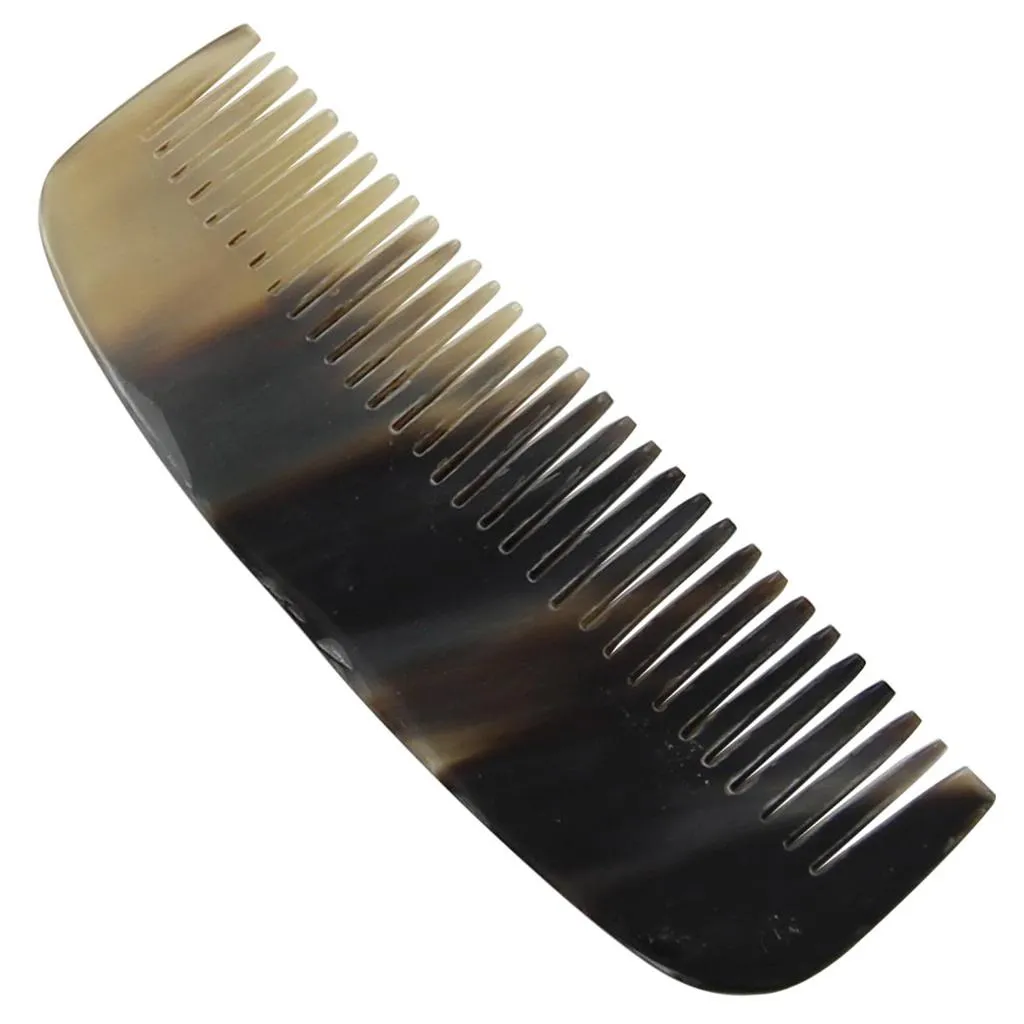
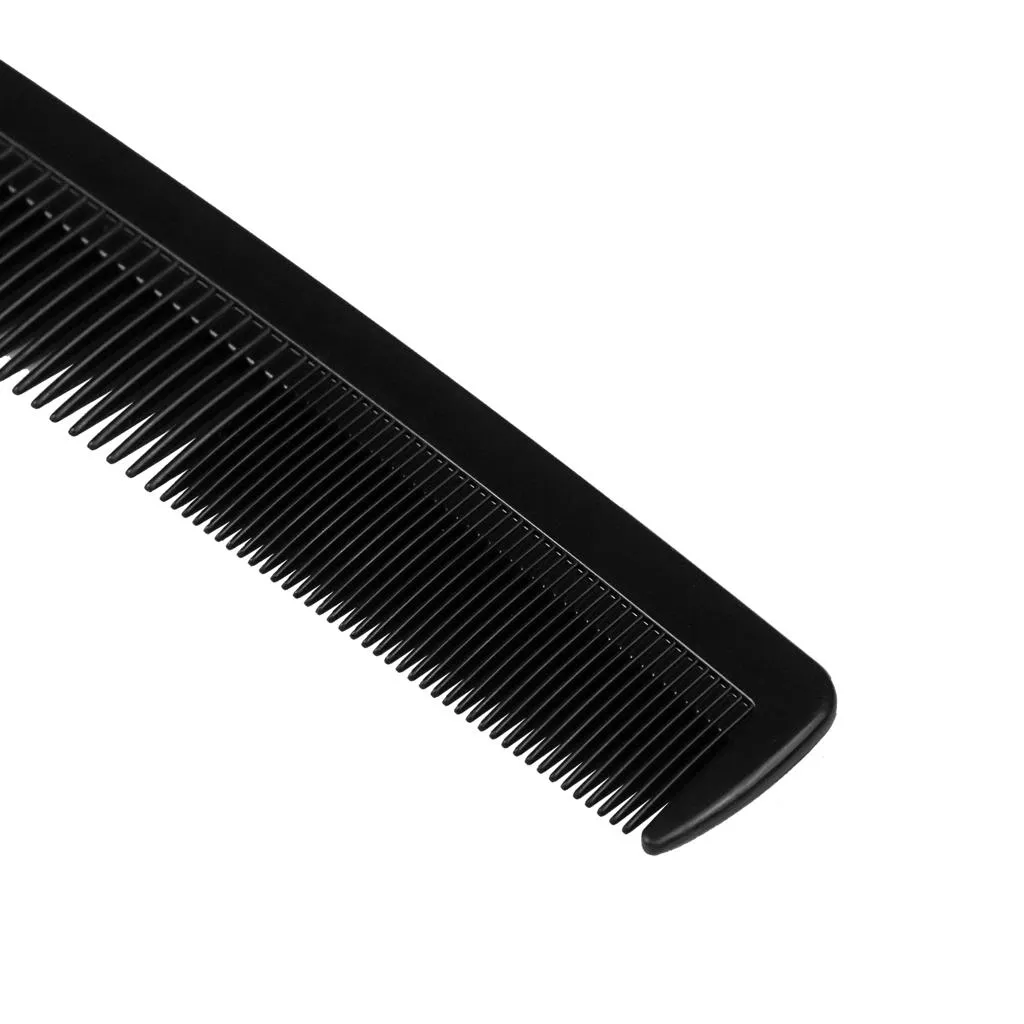
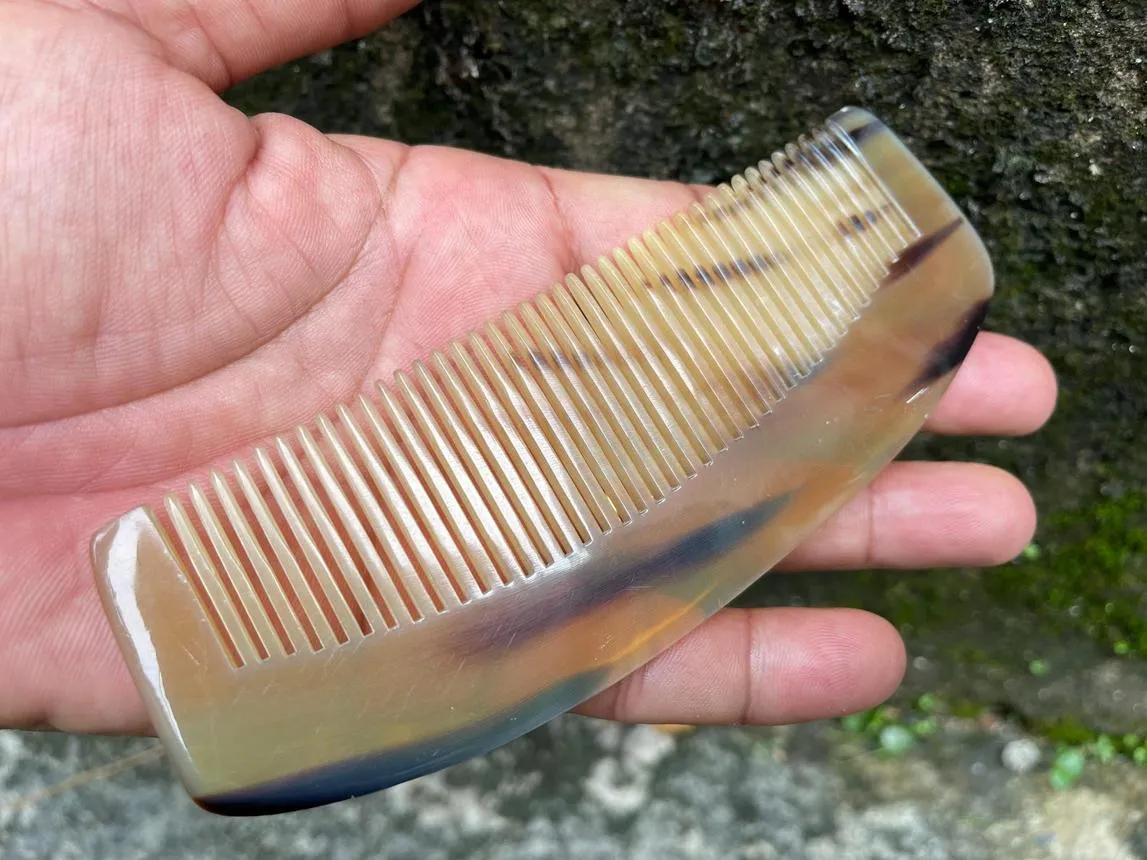
| Comparison factor | Buffalo horn comb | Plastic comb |
|---|---|---|
| Material | Natural keratin-based material | Synthetic polymer |
| Appearance | Individual natural patterns | Usually more uniform |
| Colour | Naturally variable | Available in many manufactured colours |
| Static behaviour | Often preferred for lower-static grooming | Depends on polymer and construction |
| Manufacturing | Can involve shaping and hand finishing | Commonly moulded |
| Maintenance | Requires careful handling | Generally easier to maintain |
| Water exposure | Avoid prolonged soaking | Usually more moisture tolerant |
| Heat exposure | Sensitive to excessive heat | Depends on polymer |
| Cost | Often positioned as a premium accessory | Available across budget ranges |
| Design character | Natural and individual | Uniform and versatile |
There is no universal winner.
A plastic comb may be more practical for people who prioritise low maintenance, frequent washing and inexpensive replacement.
A buffalo horn comb may appeal more to buyers who value natural materials, traditional craftsmanship and individual appearance.
For professional environments, the choice should also consider cleaning requirements and applicable hygiene procedures.
Horn should not automatically replace combs designed for high-temperature styling or rigorous salon disinfection.
The best choice depends on how the comb will be used.
Understanding the manufacturing process helps buyers recognise why finishing quality is important.
Buffalo horn is a natural material that must be carefully processed before it becomes a functional grooming accessory.
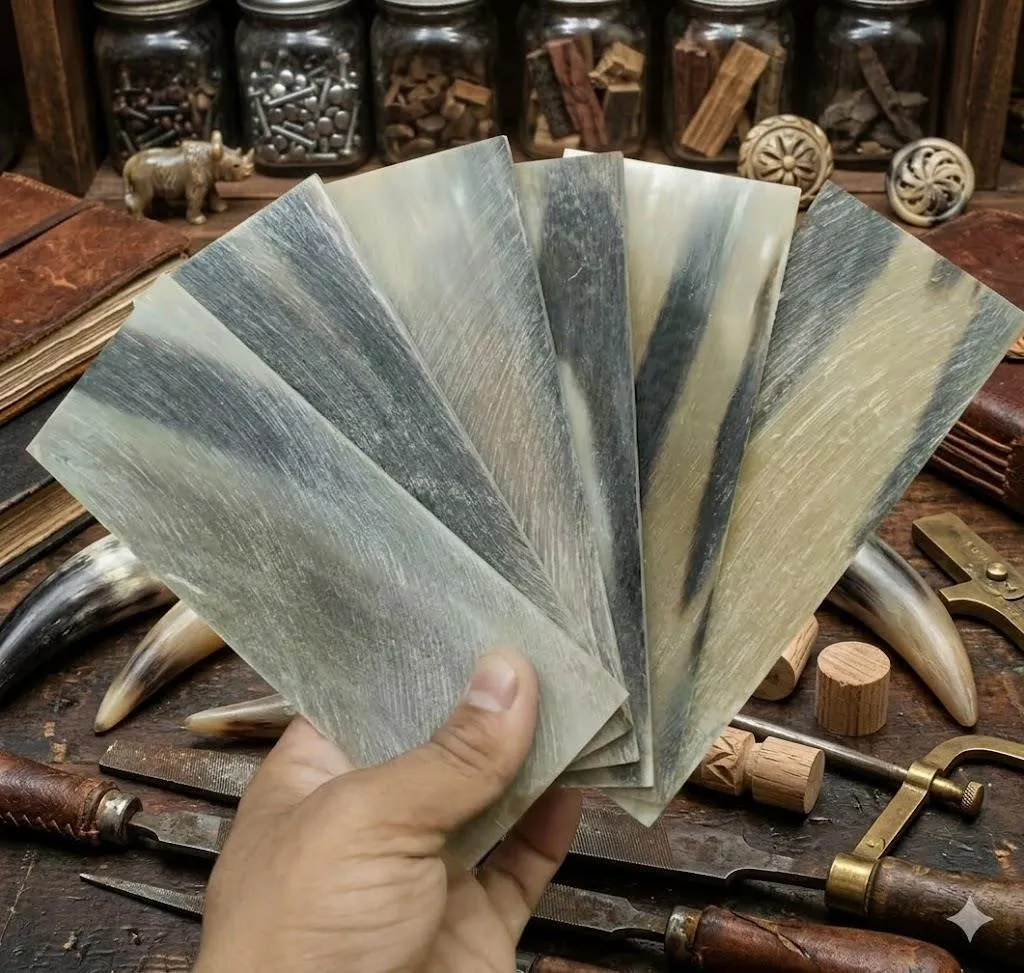
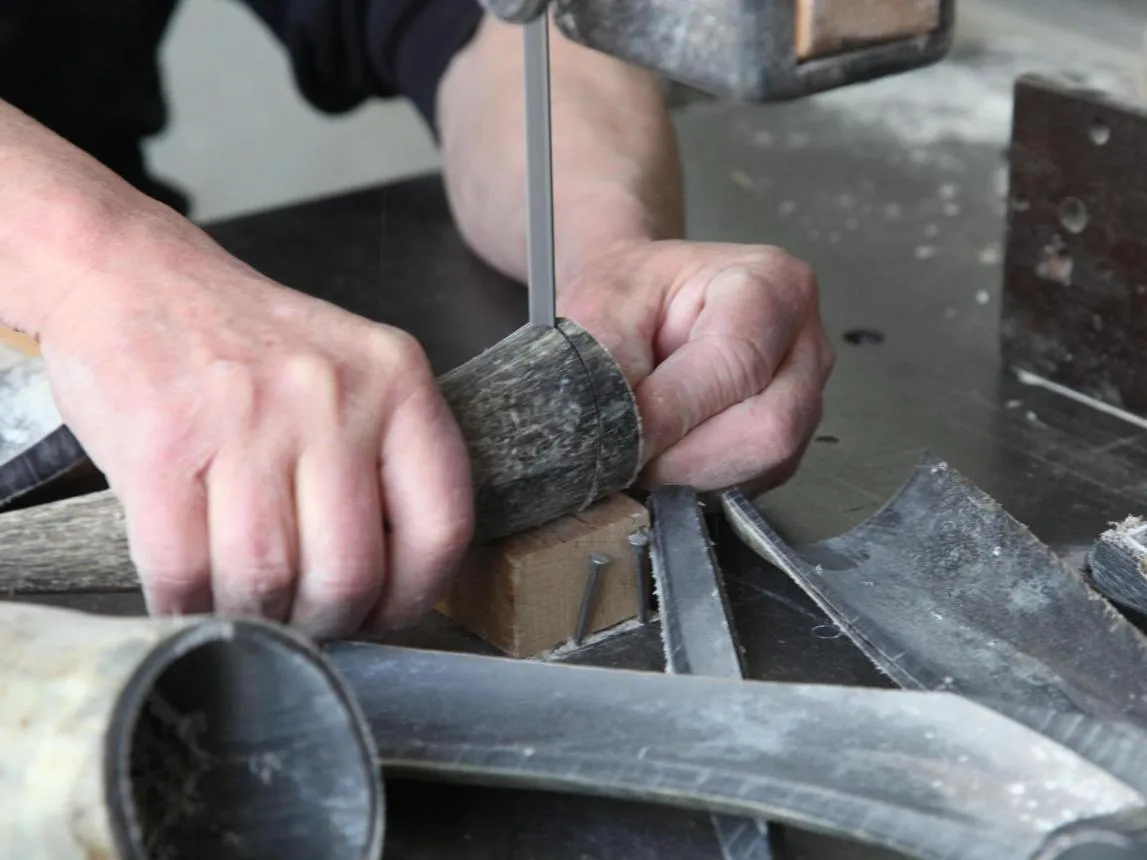
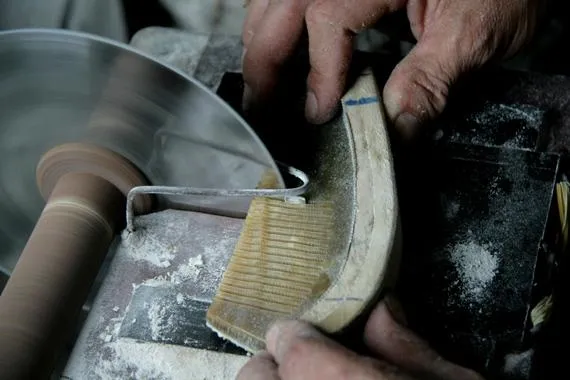
The general production process involves several stages.
Suitable horn material is selected according to the required product dimensions and construction.
Natural variations in colour, thickness and pattern may influence the final appearance.
The material is cut into suitable sections.
These sections are shaped according to the intended comb design.
The individual teeth are carefully formed.
Spacing and alignment are important because they influence how the comb interacts with hair.
The edges and teeth are refined through sanding and smoothing.
This stage is essential for removing roughness and creating a comfortable grooming surface.
The comb is polished to improve its appearance and surface finish.
Polishing also helps reveal the natural colour variations of the horn.
The finished comb should be inspected for:
Surface smoothness.
Tooth alignment.
Structural damage.
Overall shape.
Consistent finishing.
The exact tools, production sequence and finishing methods may differ between manufacturers.
For additional information about natural horn materials, see HornImpex's buffalo horn raw material guide and manufacturing and craftsmanship article .
Natural horn requires more attention than an ordinary plastic comb.
Exposure to excessive moisture, heat and rough handling can affect its shape and surface.
A simple maintenance routine can help preserve the comb's appearance and usability.
For routine cleaning:
Remove trapped hair from between the teeth.
Wipe the comb using a soft, dry cloth.
If necessary, use a slightly damp cloth for surface dirt.
Avoid prolonged contact with water.
Dry the comb immediately.
Allow it to remain in a dry, ventilated location before storage.
Follow any specific care instructions supplied by the manufacturer.
Do not leave a buffalo horn comb inside a bowl of water or submerged in a sink.
Extended moisture exposure can affect natural horn material.
This is particularly important when cleaning grooming accessories after regular use.
Avoid storing the comb:
Near radiators.
On hot surfaces.
Inside a sun-exposed vehicle.
Under direct sunlight for prolonged periods.
Near high-temperature hair-styling equipment.
Excessive heat can cause deformation or damage.
A suitable storage location should be:
Cool.
Dry.
Away from direct sunlight.
Protected from accidental impacts.
A soft pouch or dedicated grooming case can help protect the teeth during travel.
Do not force the comb through tangled hair.
Instead, gently work through tangles in smaller sections.
Avoid dropping the comb onto hard surfaces because natural horn can chip or crack.
Strong chemicals, abrasive cleaners and unsuitable solvents can affect the material's surface.
Use gentle cleaning methods and follow the supplier's care recommendations.
These recommendations are consistent with specialist natural-horn comb care guidance.
Buyers sometimes encounter products described as genuine buffalo horn even when the material composition is unclear.
It is therefore important to evaluate the supplier and the product rather than relying entirely on marketing descriptions.
Request clear information about whether the comb is made from natural buffalo horn, another horn material, bone or a synthetic substitute.
Different natural materials should not be treated as interchangeable.
Natural horn may contain irregular colour patterns and visible material variations.
These can help buyers understand the product's natural character, but appearance alone cannot conclusively establish authenticity.
Ask for close-up images showing:
The comb's surface.
Individual teeth.
Edges.
Material thickness.
Natural colour variations.
For bulk purchasing, representative samples can help assess the expected finish.
Descriptions should accurately communicate:
Material.
Dimensions.
Tooth spacing.
Comb type.
Colour variation.
Surface finish.
Intended application.
Some online sellers suggest burning, heating, scratching or soaking a comb to establish whether it is genuine horn.
These methods are not recommended.
They can damage the product, produce misleading results or create unnecessary safety risks.
A reliable material declaration, supplier documentation and appropriate product inspection are better purchasing practices.
Buffalo horn combs are not limited to individual grooming purchases.
They can also form part of product ranges offered by grooming retailers, gift shops, lifestyle boutiques and businesses specialising in natural-material accessories.
However, wholesale buyers should assess the product from a commercial perspective.
Retailers may consider stocking different designs, such as:
Fine-tooth hair combs.
Wide-tooth combs.
Beard combs.
Dressing combs.
Dual-tooth combs.
Compact pocket combs.
A varied assortment allows retailers to address different customer requirements.
Before placing a larger order, inspect representative samples.
Pay attention to:
Tooth finishing.
Surface consistency.
Material thickness.
Colour variations.
Dimensions.
Overall construction.
For natural materials, buyers should understand that individual pieces may vary.
Retailers and importers should communicate their requirements before confirming an order.
Important details include:
Product dimensions.
Comb shape.
Tooth arrangement.
Material description.
Surface finish.
Colour preferences.
Packaging expectations.
Inspection requirements.
Buffalo horn combs have a distinctive natural appearance.
Clear product photography and accurate descriptions can help customers understand why natural horn products differ from uniform synthetic alternatives.
Retailers can also explain appropriate care requirements to customers.
One of the most important considerations in wholesale procurement is consistency.
Natural horn does not provide the same uniformity as factory-produced synthetic materials.
Buyers should therefore establish acceptable variation ranges and communicate expectations regarding colour, pattern and dimensions.
When evaluating a manufacturer or supplier, consider:
Material transparency.
Product photographs.
Sample availability.
Manufacturing specifications.
Pricing communication.
Packaging arrangements.
Order timelines.
Inspection procedures.
These considerations help reduce misunderstandings during commercial purchasing.
Businesses interested in sourcing natural grooming accessories can explore HornImpex's buffalo horn comb range .
HornImpex is based in Sambhal, Uttar Pradesh, and presents buffalo horn combs among its natural horn product offerings for wholesale buyers. Its published collection includes several grooming designs.
A buffalo horn comb can also be considered as a gift for someone who appreciates natural materials and traditional craftsmanship.
Its individual patterns and handcrafted appearance make it visually different from many mass-produced grooming accessories.
Potential gifting occasions include:
Birthdays.
Anniversaries.
Father's Day.
Festive gifting.
Grooming gift sets.
Corporate gifting collections.
Consider the recipient's grooming habits before choosing a design.
For example:
A beard comb may suit someone who maintains facial hair.
A wide-tooth comb may suit someone with longer or thicker hair.
A compact pocket comb may appeal to frequent travellers.
A decorative dressing comb may suit someone who appreciates traditional accessories.
Packaging and presentation also matter.
A simple protective pouch or suitable gift box can help make the product more presentable, subject to the supplier's available packaging options.
Even an attractive product can disappoint if important purchasing considerations are overlooked.
Here are some mistakes worth avoiding.
Choosing appearance over finishing: A beautiful colour pattern does not compensate for rough teeth or poorly finished edges.
Buying the wrong tooth spacing: Fine teeth may not suit thick or heavily tangled hair.
Assuming every horn comb is identical: Natural material varies in colour, pattern and thickness.
Ignoring maintenance requirements: Prolonged soaking and excessive heat can damage natural horn.
Believing exaggerated hair-care claims: A comb cannot independently prevent hair loss, repair split ends or guarantee healthier hair.
Using unreliable authenticity tests: Burning and other destructive tests can damage the comb.
Ignoring supplier information: Buyers should understand the material, construction and product specifications before placing bulk orders.
Avoiding these mistakes makes it easier to select a product that matches both practical requirements and personal preferences.
Choosing a buffalo horn comb involves balancing material quality, tooth spacing, craftsmanship, comfort and maintenance requirements.
A suitable design should match the user's hair type and grooming routine, while a properly finished product should have smooth teeth, comfortable edges and sound construction.
Natural colour variations are part of the character of buffalo horn, but structural quality and finishing should always remain important purchasing considerations.
For individual buyers, understanding these factors helps make everyday grooming more practical. For retailers, wholesalers and importers, evaluating product specifications, sample quality and natural material variation helps create more informed sourcing decisions.
HornImpex offers a range of handcrafted buffalo horn combs from Sambhal, India, for buyers interested in natural horn grooming accessories.
Whether you are selecting a personal grooming accessory or exploring products for a retail collection, choosing the right comb begins with understanding the material and evaluating the quality of its craftsmanship.
A buffalo horn comb is made from natural buffalo horn, a keratin-based material. The horn is shaped, cut, sanded and polished to create a functional grooming accessory.
It depends on personal preference and grooming requirements. Buffalo horn combs offer natural patterns and may produce less static than some plastic alternatives. Plastic combs are generally easier to clean and require less specialised maintenance.
A wide-tooth buffalo horn comb is generally a suitable option for thick hair because its wider spacing allows hair to pass through more comfortably.
Yes. Dedicated buffalo horn beard combs are available for arranging and maintaining facial hair. Select tooth spacing according to beard thickness and length.
Remove trapped hair and gently wipe the comb with a soft cloth. If necessary, use a slightly damp cloth and dry it immediately. Avoid prolonged soaking, harsh chemicals and excessive heat.
Natural horn combs are often preferred by users seeking an alternative to plastic combs that may generate static. However, the results vary depending on hair condition, humidity and comb construction.
Yes. Natural buffalo horn can have dark, brown, amber and mixed colour patterns. Variations in appearance are normal characteristics of natural material.
HornImpex lists buffalo horn combs in its product collection and provides a contact route for wholesale inquiries. Retailers and importers can contact the company to discuss product specifications, pricing and purchasing requirements.
Looking to know more? Get in touch
Choosing a natural grooming comb involves more than selecting an attractive design. Material quality, tooth spacing, surface finishing, construction and maintenance all influence how a comb performs during everyday use. This guide explains how to choose a buffalo horn comb by understanding its natural material characteristics, different comb styles, grooming applications and quality indicators. It also explores the differences between buffalo horn and plastic combs, practical cleaning and storage recommendations, and important considerations for retailers and wholesale buyers. Whether you are purchasing a comb for personal grooming, beard care, gifting or commercial resale, this article will help you make a more informed decision and understand what to look for before choosing a natural horn grooming accessory.
Global Popularity of Buffalo Horn and Bo...
No reviews available for this blog.