A drinking mug can be more than an ordinary household accessory. Its material, shape, surface finish and craftsmanship can influence how it looks and how it fits into a particular setting.
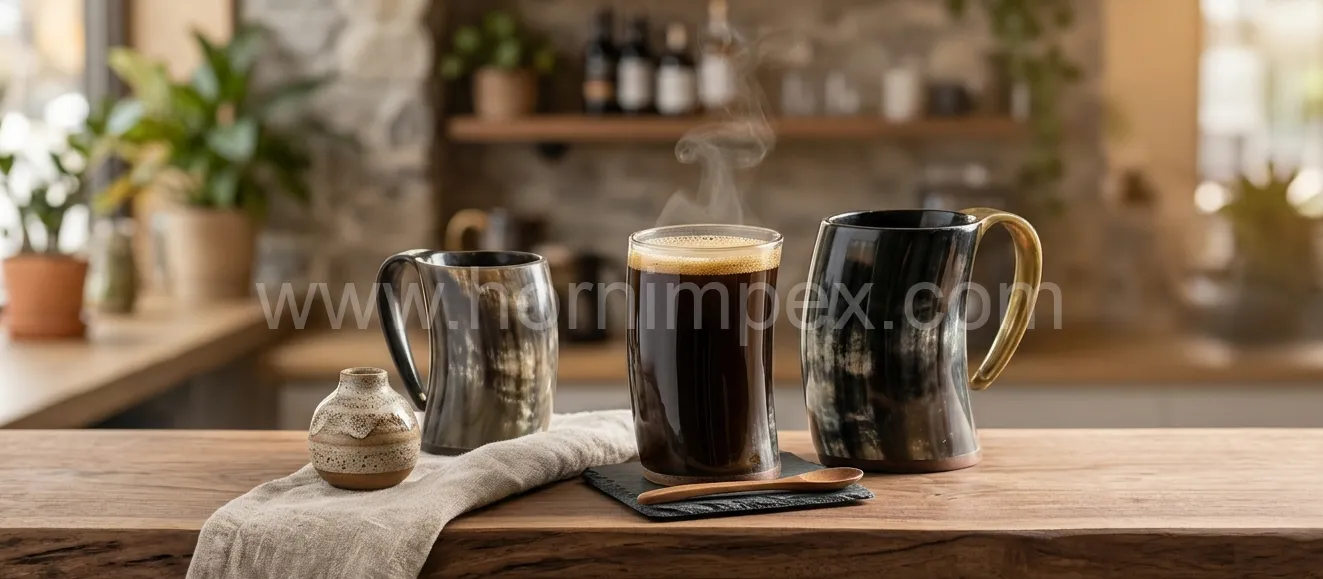
Buffalo horn mugs are distinctive because they are made using a natural material with individual variations in colour, texture and pattern. Unlike manufactured drinkware with uniform surfaces, natural horn can display combinations of dark brown, black, cream and lighter streaks.
These differences give handcrafted mugs an individual appearance.
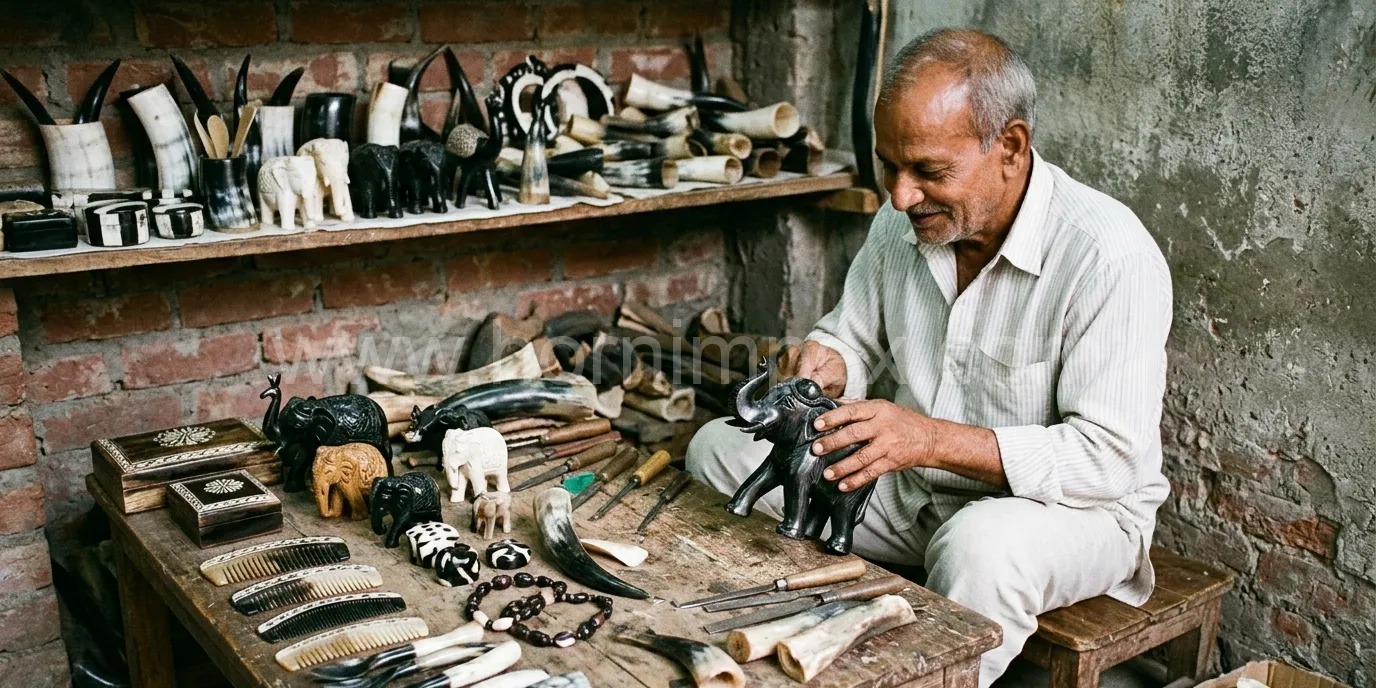
In Indian handicraft manufacturing, particularly in Sambhal, Uttar Pradesh, horn working is associated with traditional skills involving material preparation, shaping, polishing and decorative finishing.
Buffalo horn drinkware is available in several styles, including:
Traditional Viking-inspired mugs.
Natural horn drinking tumblers.
Handled buffalo horn tankards.
Engraved decorative mugs.
Brass-accented drinking cups.
Horn glasses with contrasting bases.
For retailers, gift businesses and international buyers, understanding these designs makes it easier to select products that suit different customer preferences.
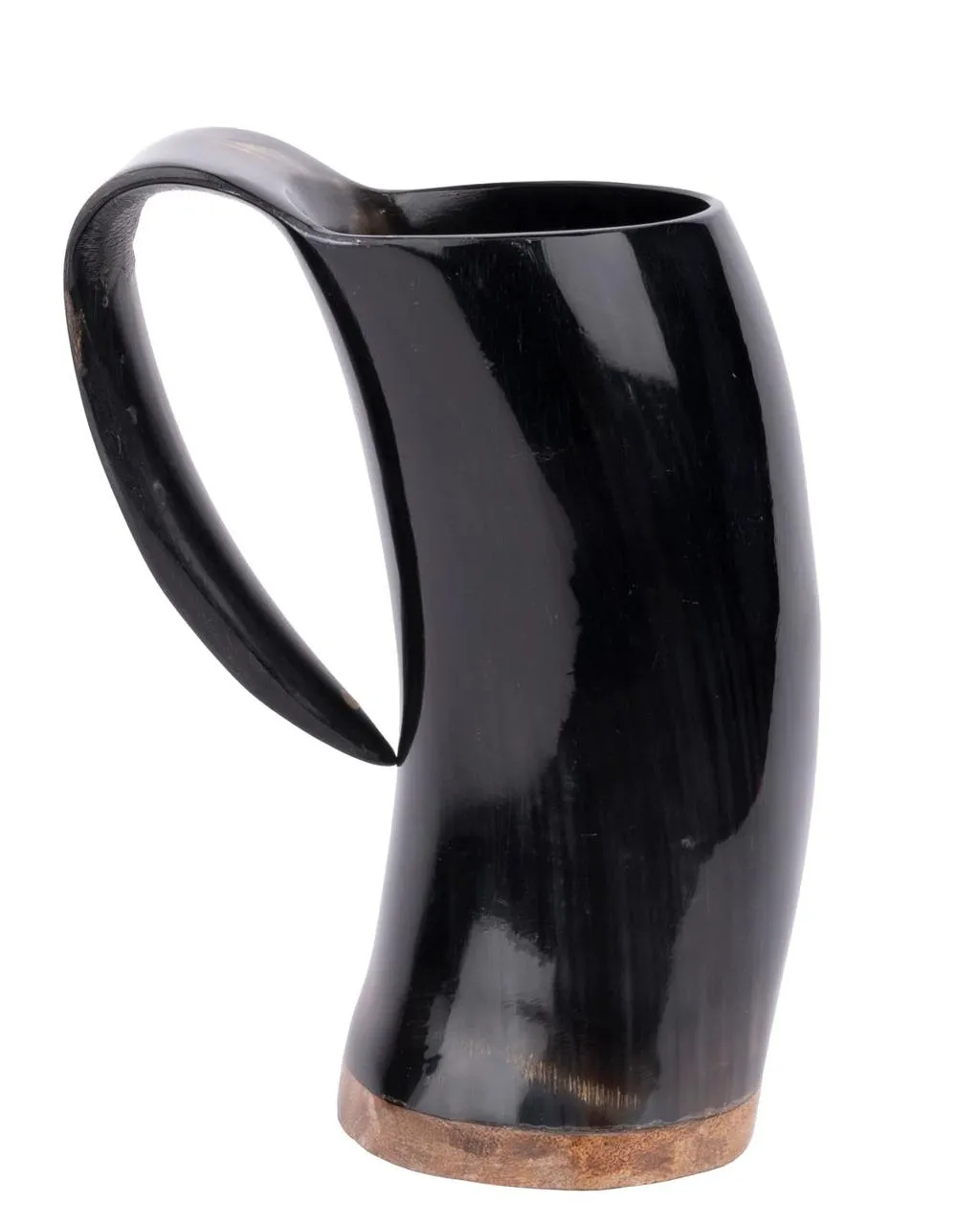
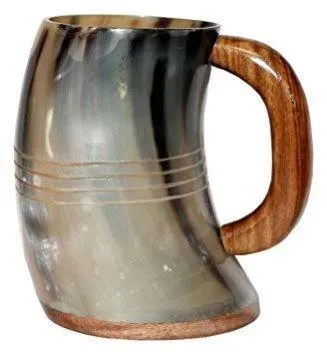
Buffalo horn is a natural material composed primarily of keratin, the structural protein also found in hair and nails.
It has been used in traditional craft applications for making decorative and functional objects.
Its natural appearance is one of its most recognizable characteristics.
Buffalo horn does not have one standard colour. Depending on the individual material, finished pieces can display:
Deep black and dark brown shades.
Honey-brown and amber tones.
Cream and ivory-like natural shades.
Mixed brown and black patterns.
Irregular streaks and translucent-looking areas.
These variations influence the final appearance of a mug.
Two products made using similar techniques may still look different because the original horn material is not visually identical.
The appearance of a finished buffalo horn mug depends on its processing and finishing.
Common finishing approaches include:
Natural polish: Highlights the material's original appearance.
High-gloss polish: Produces a smoother, more reflective surface.
Matte finish: Creates a comparatively understated appearance.
Carved detailing: Introduces decorative patterns.
Engraved designs: Adds visual character through surface decoration.
The selected finish should complement the intended design and application.
For individual consumers, natural variation makes each item visually distinctive.
For wholesale buyers, it introduces an important purchasing consideration: exact colour matching across a large quantity may not always be possible.
Buyers should discuss acceptable colour ranges, patterns and finishing expectations before confirming bulk orders.
Buffalo horn mugs can be produced in different shapes and decorative styles. The appropriate design depends on whether the product is intended for functional drinkware, themed collections, gifting or display.
Viking-inspired mugs are among the recognizable styles associated with traditional horn drinkware.
Their appearance often draws inspiration from historical drinking vessels and medieval-themed designs.
Common visual characteristics include:
Rustic natural horn patterns.
Bold and curved silhouettes.
Engraved decorative motifs.
Contrasting metal accents on selected designs.
Distinctive handles on tankard-style variations.
These mugs are particularly relevant to:
Medieval-themed gift collections.
Historical merchandise retailers.
Collectors of Viking-inspired accessories.
Themed restaurants and event displays.
Specialty handicraft stores.
Designs should be evaluated individually because decorative details and construction vary.
HornImpex has a dedicated collection of Buffalo Viking Drinking Horns for buyers exploring traditional horn drinkware.
Tumblers generally have a simpler silhouette than handled mugs.
Their appearance allows the natural horn material to remain the main visual feature.
Depending on construction, a tumbler may have:
A relatively straight-sided body.
A gently tapered shape.
A polished exterior.
A contrasting base.
Natural colour variations.
These designs can complement rustic table settings, decorative bar collections and handcrafted gift assortments.
For commercial buyers, simpler designs can also provide a different retail option from heavily engraved or ornamented mugs.
Handled tankards combine a drinking vessel with an attached or integrated handle.
Their appearance is influenced by the handle shape, body proportions and overall finishing.
When evaluating a handled design, consider:
Handle attachment and construction.
Smoothness of the grip.
Stability when placed on a flat surface.
Surface finishing around the handle.
Overall balance and weight.
These details are particularly important for products intended for repeated handling.
Engraving introduces decorative detail to the natural surface.
Depending on the design, patterns may include geometric lines, traditional motifs, lettering or themed illustrations.
Engraved mugs may appeal to:
Gift retailers.
Specialty handicraft shops.
Collectors.
Themed merchandise businesses.
Buyers looking for visually distinctive products.
For wholesale orders, buyers should request representative samples or photographs of the actual engraving quality before approving a design.
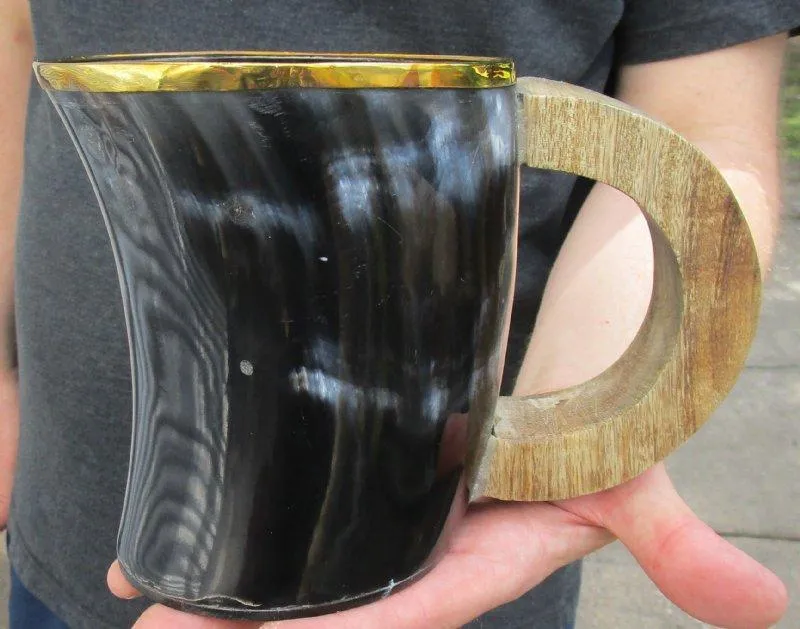
Some horn drinkware designs incorporate metal detailing.
Brass accents can create a contrast between the warm metallic finish and the natural patterns of horn.
Depending on the design, these accents may appear around the rim, body or other decorative areas.
When purchasing, check the quality of the metal finishing and how securely the components are attached.
The presence of a brass accent does not automatically indicate that a mug is suitable for beverage use. Its internal construction and food-contact suitability must be checked separately.
The production of a handcrafted horn mug involves several stages. The precise method depends on the shape, thickness, construction and finishing requirements.
The raw horn material is assessed for its suitability for the intended product.
Factors may include:
Natural colour.
Thickness.
Curvature.
Surface condition.
Available dimensions.
The selected material influences the final shape and appearance.
Before shaping, the material requires appropriate preparation.
This stage helps remove unwanted residues and prepares the surface for further processing.
The preparation method depends on the material and the intended manufacturing process.
The material is worked into the desired form.
For a mug, the craftsperson must consider the vessel's dimensions, opening, body profile and construction.
Handled designs may require additional shaping and assembly.
Smoothing helps refine the external appearance.
Polishing enhances the natural visual characteristics of the horn and creates the selected surface finish.
The final appearance can range from understated natural polish to a more reflective finish.
Depending on the design, additional work may include engraving, carving or the addition of decorative elements.
A finished product should be checked for visible cracks, sharp edges, unstable construction and surface defects.
For mugs intended for drinking, the internal surface, sealing system and food-contact suitability require additional attention.
Important: A polished horn surface alone does not establish that a product is safe for drinking. Food-contact suitability depends on the material preparation, internal coating or lining where applicable, and the manufacturer's documented instructions.
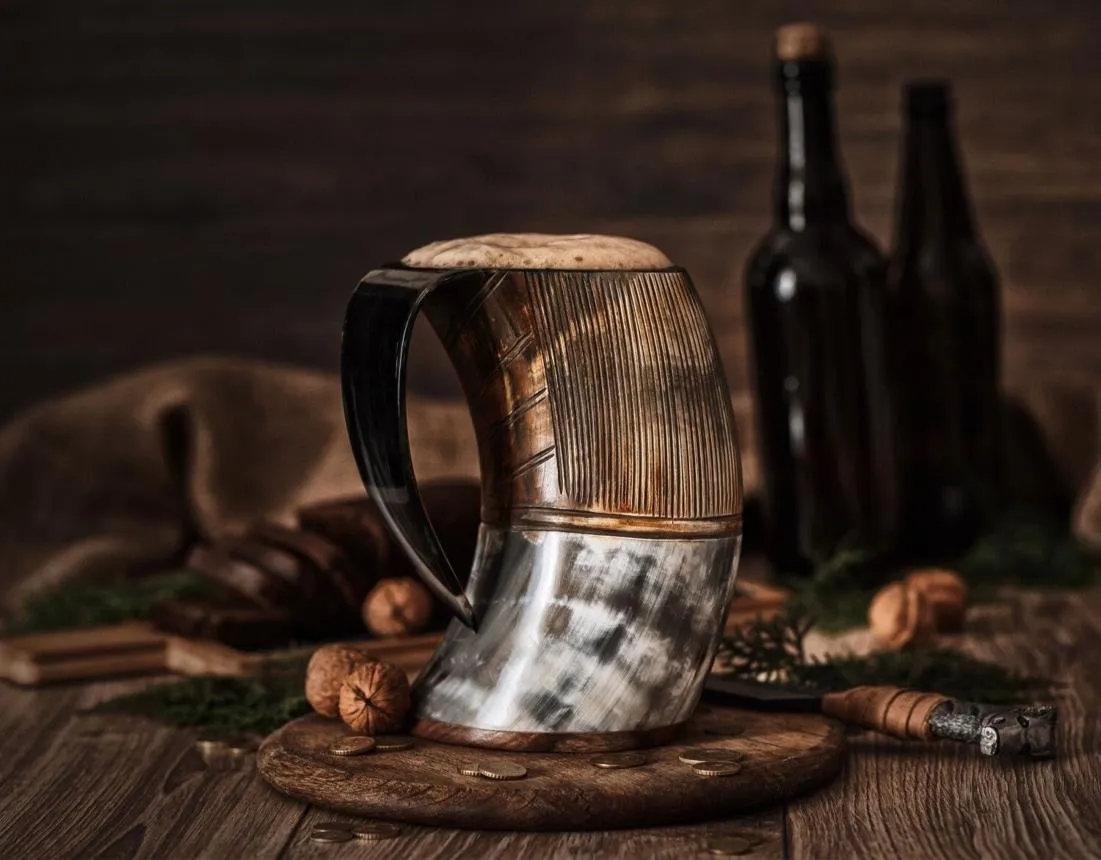
Buffalo horn mugs can serve different purposes depending on their construction.
Distinctive horn mugs can complement rustic or medieval-inspired home bar arrangements.
They may be displayed alongside wooden serving accessories and other decorative drinkware.
Some consumers appreciate handcrafted objects because of their natural material characteristics and individual appearance.
Engraved or Viking-inspired mugs can be especially relevant to themed collections.
Horn mugs may be considered for:
Birthday gifts.
Collectible-themed gifts.
Decorative gift assortments.
Specialty retail collections.
Personalized gifting, where customization is available.
Gift buyers should confirm whether the selected item is intended for actual beverage use or decorative presentation.
Themed hospitality businesses may use horn-inspired drinkware as part of a distinctive presentation concept.
However, functional service requires products with verified food-contact suitability and cleaning instructions compatible with the establishment's hygiene procedures.
Decorative items should not be substituted for approved serviceware.
Retailers can consider different styles to serve different customer preferences.
For example:
Customer segment | Relevant design |
|---|---|
Historical merchandise buyers | Viking-style mugs |
Home bar enthusiasts | Natural horn tumblers |
Gift shoppers | Engraved designs |
Premium decorative retailers | Brass-accented mugs |
Handicraft collectors | Distinctive natural-pattern pieces |
This approach allows businesses to organize their product collections around design preferences rather than offering only one standard style.
Buffalo horn drinkware has a distinctive appearance, but it is important to understand how it differs from commonly used materials.
Comparison factor | Buffalo horn | Stainless steel | Glass | Ceramic |
|---|---|---|---|---|
Appearance | Natural patterns | Metallic finish | Transparent or coloured | Wide decorative variety |
Surface character | Individual variations | Generally uniform | Smooth | Glazed or textured |
Design appeal | Rustic and handcrafted | Contemporary | Minimalist or decorative | Traditional or modern |
Weight | Varies by construction | Varies by thickness | Varies by thickness | Varies by construction |
Maintenance | Requires material-specific care | Depends on grade and finish | Generally straightforward | Depends on glaze and construction |
Food suitability | Depends on preparation and lining | Depends on material grade | Depends on product construction | Depends on glaze and construction |
The main distinction is visual and material character.
Buffalo horn is often selected for its natural appearance and handcrafted aesthetic rather than because it outperforms conventional drinkware in every functional category.
Buyers should evaluate the actual product specification before making a comparison.
Whether purchasing one piece or sourcing a larger collection, buyers should evaluate more than the external appearance.
The following factors can help identify suitable products.
Look for a consistent level of finishing without expecting every piece to have identical patterns.
Check for:
Visible cracks.
Unwanted chips.
Uneven surface finishing.
Excessive roughness.
Noticeable structural damage.
Natural colour variation should not automatically be treated as a defect.
The mug should have a well-finished opening and a stable body.
For handled designs, examine the handle attachment and grip.
For tumblers, check that the base sits securely on a flat surface.
This is particularly important if the mug is intended for drinking.
Ask the supplier:
Is the product intended for decorative use or beverage service?
Does it have an internal food-contact coating or lining?
What is the lining material?
Is there documentation supporting its suitability for the intended beverages?
What temperatures and types of liquids are permitted?
What cleaning instructions should be followed?
Do not assume that all natural horn mugs have identical internal treatments.
A polished exterior should have an even appearance appropriate to the selected design.
For engraved products, inspect the clarity and consistency of the decorative details.
For metal-accented designs, examine the quality of the fittings.
Choose a design based on the customer or intended use.
For example:
Collectors may prefer Viking-inspired designs.
Gift shops may favour engraved products.
Home décor stores may prefer distinctive natural patterns.
Hospitality buyers need documented functional suitability.
Retailers may prefer a selection of different designs.
For bulk procurement, samples can help assess the actual material, finishing and construction.
A useful sample evaluation should include:
Appearance and colour range.
Dimensions and weight.
Overall workmanship.
Handle or base construction.
Packaging condition.
Internal finish and relevant product documentation.
This reduces the possibility of misunderstandings between buyers and suppliers.
Natural horn requires more consideration than many conventional drinkware materials.
Its care requirements depend on its construction, surface treatment and internal lining.
The following are conservative general precautions. Always follow the specific manufacturer's instructions.
Clean the mug promptly after use, if it is approved for beverage service.
Use the cleaning method and water temperature specified by the manufacturer.
Dry the mug carefully with a soft cloth.
Store it in a dry, well-ventilated location.
Keep it away from prolonged direct sunlight and excessive heat.
Avoid abrasive brushes and aggressive cleaning chemicals unless specifically approved.
Dishwasher cleaning unless expressly approved.
Microwave heating.
Prolonged soaking.
Boiling liquids unless specifically approved.
Strong solvents and abrasive cleaning products.
Leaving beverages inside for extended periods.
These precautions are important because excessive heat, moisture and unsuitable cleaning chemicals may affect natural horn or its internal finish.
Some horn drinkware products use an internal coating or lining, while construction varies between products.
A coating may be intended to separate the beverage from the underlying material.
However, not every coating is suitable for every beverage or temperature.
For this reason, buyers should obtain clear product-specific instructions rather than relying on general assumptions about horn drinkware.
For additional information on the broader product category, explore HornImpex buffalo horn mugs and glasses .
India has several established centres of traditional horn and bone craftsmanship.
Sambhal in Uttar Pradesh is particularly associated with horn and bone handicraft production.
The Indian handicrafts tradition includes a wide variety of functional and decorative products created through material preparation, shaping, carving, polishing and other finishing processes.
Buffalo horn mugs represent one application of these material-working skills.
Their visual appeal comes from the combination of:
Natural material characteristics.
Individual design decisions.
Surface finishing.
Decorative craftsmanship.
Traditional and contemporary styling.
The broader Indian horn and bone craft tradition is documented in the Development Commissioner's handicrafts reference material, which identifies Sambhal among India's horn and bone craft centres.
For readers interested in the wider cultural context, HornImpex has also published Buffalo Horn and Bone Handicrafts: A Timeless Blend of Tradition, Sustainability, and Artistry .
Buffalo horn mugs can be relevant to retailers, importers, gift shops and specialty handicraft distributors.
However, wholesale purchasing requires a different evaluation process from buying an individual decorative item.
Retailers should consider whether their customers are more interested in:
Simple natural tumblers.
Handled tankards.
Viking-inspired mugs.
Engraved designs.
Metal-accented drinkware.
A varied collection can help retailers serve different aesthetic preferences.
Natural horn varies between pieces.
Wholesale buyers should communicate acceptable variations in colour, grain, pattern and shape.
A representative sample or approved reference photographs can help establish expectations.
This is a particularly important consideration for international buyers.
If the products are intended for beverage service, confirm the applicable food-contact requirements in the destination market and request relevant material and coating documentation.
Decorative suitability and food-contact suitability are separate considerations.
Horn mugs should be packed to reduce the risk of scratches, surface damage and breakage of attached components.
Buyers should discuss individual protection, carton arrangement and packaging expectations before placing a large order.
Before confirming an order, buyers should clarify:
Available designs.
Material and finish variations.
Product dimensions.
Construction details.
Sample availability.
Order quantities.
Pricing and payment terms.
Production and dispatch schedules.
Destination-market compliance requirements.
Not every supplier offers the same options, so these details should be confirmed directly.
For buyers interested in Indian horn handicrafts, HornImpex offers a product-focused starting point for exploring buffalo horn drinkware.
Based in Sambhal, Uttar Pradesh, HornImpex works with buffalo horn and bone raw materials and finished handcrafted products.
Its buffalo horn mugs and glasses category includes a range of designs, such as:
Handcrafted buffalo horn wine glasses.
Viking-style beer mugs.
Natural horn tumblers.
Brass-accented drinking glasses.
Engraved horn drinkware.
Handled natural horn mugs.
The selection makes the category relevant to retailers, wholesalers, gift businesses and buyers exploring handcrafted drinkware.
Explore the buffalo horn mugs and glasses collection to review the available product range.
For related traditional drinkware designs, buyers can also explore buffalo Viking drinking horns .
HornImpex's broader Indian handicrafts collection provides additional context about its handcrafted product categories.
The appeal of handcrafted drinkware lies in its ability to offer something visually different from standard mass-produced products.
Natural materials, individual patterns and decorative finishing can help horn mugs occupy a distinctive position in specialty retail and gift collections.
Several design directions offer opportunities for product development:
Minimalist designs: Simple forms that highlight natural horn patterns.
Traditional designs: Viking-inspired and historical styling.
Decorative engraving: More elaborate visual detailing.
Mixed-material construction: Combining horn with suitable metal or other components.
Gift-oriented presentation: Attractive packaging and coordinated product collections.
For retailers, the most appropriate design direction will depend on customer preferences, price positioning and the product's intended application.
For manufacturers and wholesalers, understanding these preferences can help guide product selection and design discussions.
Buffalo horn mugs bring together the distinctive appearance of natural horn and the visual possibilities of traditional handicraft techniques.
From natural tumblers and handled tankards to Viking-inspired and engraved designs, different styles serve different decorative, gifting and retail purposes.
The most important considerations when choosing these products are material quality, construction, finishing, intended use and appropriate care.
For wholesale buyers, it is equally important to establish clear expectations regarding natural material variations, product consistency, packaging and food-contact suitability.
HornImpex offers a range of buffalo horn mugs and glasses for buyers exploring handcrafted Indian drinkware.
Whether you are a retailer developing a distinctive product collection or a buyer interested in traditional horn craftsmanship, choosing the right design begins with understanding the material and its intended application.
Explore the HornImpex buffalo horn drinkware collection or contact HornImpex to discuss product inquiries and purchasing requirements.
Buffalo horn mugs are handcrafted drinkware or decorative vessels made using natural buffalo horn. The material has distinctive colour variations, patterns and textures.
Some buffalo horn mugs are designed for beverage use, while others are decorative. Drinking suitability depends on their construction, internal coating or lining, and documented food-contact suitability. Always check the manufacturer's instructions.
Common designs include Viking-style mugs, handled tankards, natural horn tumblers, engraved mugs and brass-accented drinking vessels.
Follow the manufacturer's cleaning instructions. Generally, avoid prolonged soaking, dishwashers, excessive heat and abrasive cleaning materials. Dry the product carefully after cleaning.
Buffalo horn is a natural material. Its colour, thickness, texture and pattern vary between individual pieces, resulting in different appearances even when similar designs are used.
Yes. Their distinctive natural appearance and handcrafted designs make them interesting gift options for collectors, themed merchandise buyers and people who appreciate traditional handicrafts.
Wholesalers should evaluate material quality, dimensions, finishing, construction, design consistency, packaging, order quantities and relevant food-contact documentation when the products are intended for drinking.
Businesses can explore Indian handicraft manufacturers and suppliers such as HornImpex in Sambhal, Uttar Pradesh. Buyers should communicate their design, quantity, quality and intended-use requirements before placing orders.
Looking to know more? Get in touch
Buffalo horn mugs are distinctive handcrafted drinkware pieces that combine natural material characteristics with traditional Indian craftsmanship. Their appeal comes from naturally occurring colour variations, individual patterns, polished surfaces and a range of traditional and contemporary designs. From Viking-inspired drinking mugs and handled tankards to engraved tumblers and decorative drinking cups, these products offer different possibilities for collectors, gift buyers, retailers and hospitality-themed settings. This guide explores popular buffalo horn mug designs, how they are made, their decorative and practical applications, important buying considerations, and appropriate care. It also explains what wholesale buyers should evaluate when sourcing horn drinkware and how to distinguish decorative products from mugs intended for beverage use.
Buffalo Horn and Bone Handicrafts: A Tim...
No reviews available for this blog.