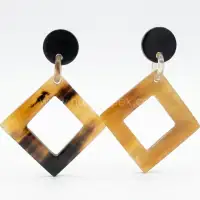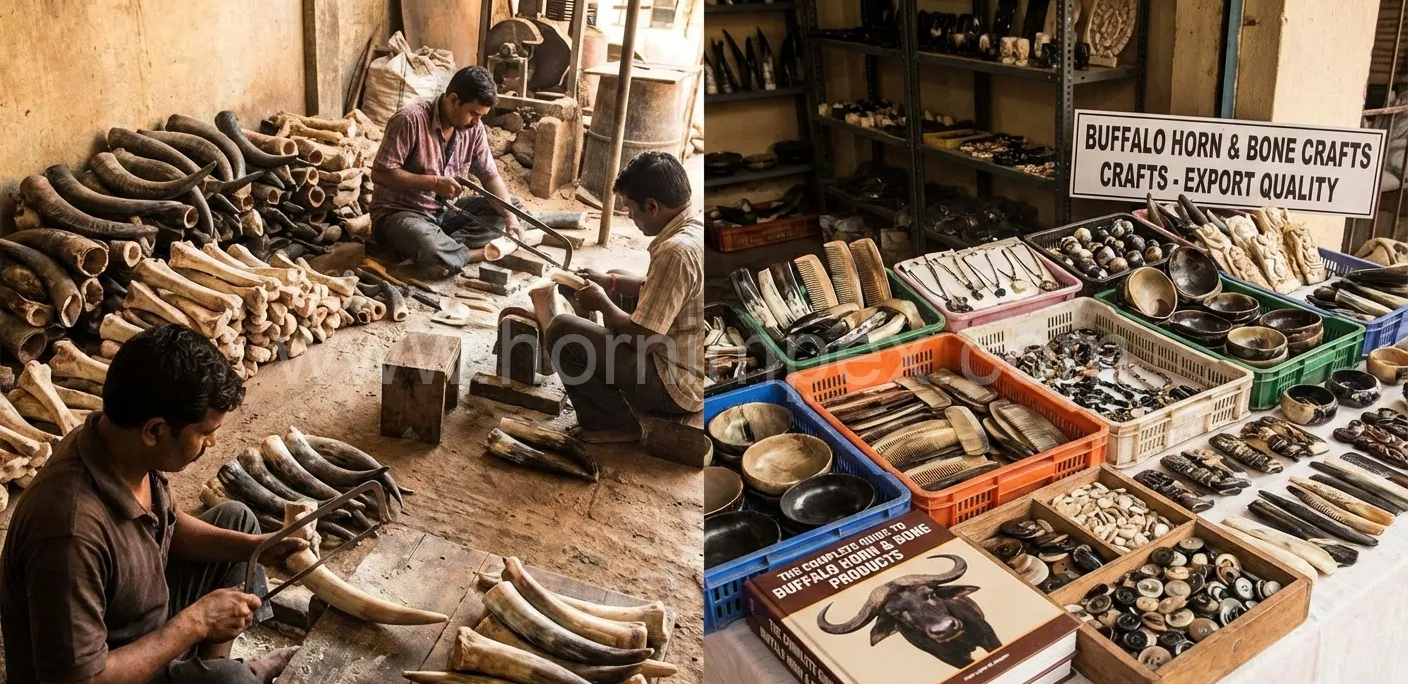
Sambhal has been a traditional center for horn and bone craftsmanship since the Mughal era.
Artisans shape raw horn into drinkware, jewelry, utensils, and décor items.
Legacy techniques, such as hand-carving and polishing, coexist with modern machinery.
The industry supports local livelihoods and preserves cultural heritage.
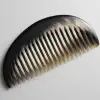
Buffalo horn: Strong, flexible, naturally glossy; ideal for drinkware, knife handles, combs.
Bone: Durable, porous, lighter; preferred for décor, inlays, and craft accents.
Comparison table: Horn vs Bone (durability, aesthetics, export suitability)
Integration of eco-friendly practices: only naturally shed horns are used; no animal cruelty.
Traditional: Hand-carving, polishing with natural abrasives, artisanal shaping.
Modern: CNC cutting, heat-molding, precision finishing.
Multi-step quality inspection ensures uniformity for international export.
Compliant with CITES regulations (for horn export).
Use of buffalo horns sourced post-slaughter ethically, ensuring no animal harm.
Recycling and zero-waste practices in workshops.
US & Canada: High demand for horn drinkware, ethical gifts, and private label décor.
EU & UK: Emphasis on sustainability, premium crafts, and ethical sourcing.
Middle East: Decorative items, knife handles, and luxury drinkware in high demand.
Asia & Australia: Growing niche markets for artisanal crafts and fashion accessories.
Market forecast: 10–15% CAGR in luxury craft exports.
Export licenses, CITES compliance, and quality certification (ISO 9001 / FSC optional).
Packaging and labeling standards for different regions.
Drinkware: Horn cups, mugs, and chalices.
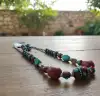
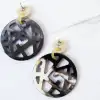
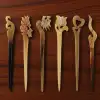
Fashion: Jewelry, hair accessories, belt buckles.
Home décor: Bowls, trays, inlays.
Private label opportunities for branded exports.
Typical MOQ: 50–200 units per SKU.
Pricing influenced by raw material quality, craftsmanship, and finish.
Quality checks: visual inspection, polish uniformity, and structural integrity.
A US retailer imports 200 horn mugs monthly for boutique stores.
UK private label brand collaborates with Sambhal artisans for a jewelry line.
FAQ Section
How can I legally export buffalo horn products to the US?
Comply with US Fish & Wildlife Service regulations and CITES certification. Ensure your products meet labeling and packaging standards.
What is the difference between buffalo horn and bone products?
Horn is stronger and flexible; bone is lighter, porous, and ideal for decorative items. Each has unique aesthetics suitable for different crafts.
Are buffalo horn products ethically sourced?
Reputable suppliers use only naturally shed or post-slaughter horns; animal cruelty is avoided.
What is the typical MOQ for wholesale horn items?
50–200 units per SKU depending on product type and complexity.
Which countries have high demand for horn crafts?
US, UK, EU, Middle East, Canada, and Australia are top markets.
Can I create private label horn products?
Yes, many suppliers provide customization and branding options for retailers.
Do I need special packaging for exports?
Yes, use moisture-proof, impact-resistant packaging with compliance labeling.
Are there certifications required for bone crafts?
ISO 9001 and FSC certification improve buyer confidence and market access.
Looking to know more? Get in touch
Global Demand and Export Opportunities f...
No reviews available for this blog.