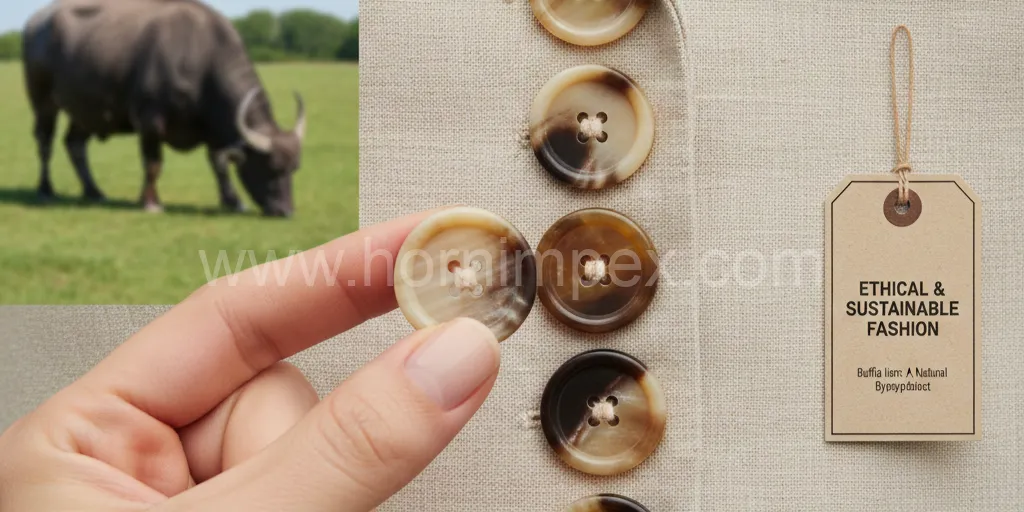
Buffalo horn buttons have gained recognition in the fashion industry for their natural beauty, durability, and ethical sourcing. Unlike synthetic alternatives, these buttons are often handcrafted by skilled artisans, preserving traditional techniques while promoting sustainability. Understanding their production, market dynamics, and legal considerations can help designers, researchers, and artisans make informed decisions. This blog explores the science behind buffalo horn, the role of Sambhal craftsmen, industry insights, and ethical sourcing practices across India, the USA, and Europe.
Buffalo horn buttons have been cherished for centuries, not only for their functional utility but also for their natural beauty and connection to traditional craftsmanship. Unlike plastic or synthetic alternatives, each buffalo horn button is unique, reflecting the natural striations, colors, and textures of the horn from which it is made. These buttons are not merely decorative; they tell a story of sustainable material use, artisanal skill, and centuries-old cultural practices. For designers, researchers, and artisans, understanding buffalo horn buttons requires exploring both the material science behind the horn and the process by which these buttons are ethically and sustainably produced.
Buffalo horn is primarily composed of keratin, the same structural protein found in human hair, nails, and animal hooves. This composition gives the horn durability, flexibility, and resilience, making it an ideal material for buttons that can withstand repeated use without cracking or losing shape. Unlike bone, which is rigid and brittle, buffalo horn has a slight flexibility that allows it to endure pressure without breaking, while also maintaining a polished, glossy finish when worked by skilled hands.
Keratin-rich horn is also naturally biodegradable, which means it does not contribute to long-term waste like synthetic plastics. Its density allows artisans to carve intricate designs, shapes, and sizes, making buffalo horn buttons highly customizable for fashion, craft, and accessory applications. Furthermore, the natural coloration of horn varies from light amber to deep brown and black, sometimes displaying striking streaks or swirls, giving each button a unique aesthetic appeal.
A critical consideration in the production of buffalo horn buttons is ethical sourcing. Most ethically sourced buffalo horns are collected as by-products of the meat industry or from naturally shed horns, ensuring that no animal is harmed solely for its horn. This practice aligns with international standards for animal welfare and prevents the exploitation of wildlife.
In India, particularly in regions like Sambhal, Uttar Pradesh, buffalo horns are collected, cleaned, and prepared by local artisans who have inherited the craft over generations. These horns, once discarded or considered waste in some industries, are transformed into high-value, sustainable materials for button production. The process not only reduces waste but also provides meaningful employment to rural communities, supporting artisan livelihoods and cultural heritage.
Sambhal has earned a reputation as the hub of horn craftsmanship in India. Artisans here utilize traditional methods to convert raw buffalo horns into polished buttons. The process involves multiple steps:
Cutting and Shaping: Raw horns are first cut into manageable segments. Skilled artisans determine the best orientation to maximize the natural pattern and minimize defects.
Heating and Softening: Horn is naturally hard. Gentle heat is applied to soften the material slightly, allowing for easier shaping without cracking.
Polishing: Using natural abrasives and manual techniques, artisans polish the surface to a smooth, glossy finish that highlights the horn’s natural coloration.
Carving and Drilling: Buttons are carved into desired shapes, sizes, and sometimes engraved with decorative motifs. Holes are drilled carefully to maintain structural integrity.
Final Finishing: A final polish, often using natural oils or waxes, enhances the button’s shine and preserves the material.
These techniques, refined over centuries, ensure that buffalo horn buttons are not only functional but also works of art, each reflecting the artisan’s skill and attention to detail.
Sustainability in buffalo horn button production is multi-dimensional. It encompasses environmental, social, and cultural sustainability:
Environmental: By using naturally shed or by-product horns, artisans reduce reliance on synthetic materials like plastic, decreasing environmental pollution and carbon footprint.
Social: The craft sustains local communities, provides fair employment, and encourages knowledge transfer between generations.
Cultural: Traditional techniques preserve Sambhal’s heritage and maintain the integrity of Indian horn craftsmanship.
Compared to synthetic alternatives, buffalo horn buttons offer a lower environmental impact while simultaneously supporting artisan economies, making them a truly ethical fashion accessory.
Looking to know more? Get in touch

While buffalo horn buttons are celebrated for their craftsmanship and sustainability, understanding the legal, ethical, and market dimensions is essential for designers, researchers, and artisans. Ethical sourcing, international trade laws, and common misconceptions can influence both the availability and perception of these materials.
Buffalo horn, unlike ivory from endangered species, is legally traded internationally when sourced ethically. However, certain regulations must be observed:
India: Buffalo horn is legal for trade. Artisans in regions like Sambhal produce buttons that are exported globally. Ethical sourcing guidelines are followed to ensure no harm to animals.
USA: Importing buffalo horn buttons is generally legal, as water buffalo are not endangered. However, importers should have documentation proving ethical sourcing.
Europe: Regulations are similar to the USA. While there is no CITES restriction on buffalo horn, transparency in sourcing is recommended to comply with sustainable trade practices.
Understanding these regulations prevents legal pitfalls and reinforces the ethical integrity of the buttons.
Ethical concerns arise primarily when sourcing practices are unclear. To avoid contributing to illegal wildlife trade, it is crucial that buffalo horn comes from:
Naturally Shed Horns: Horns that fall off naturally during the animal’s life.
By-products of the Meat Industry: Horns obtained as a result of meat production, which would otherwise go to waste.
Buttons sourced through unethical means can harm animal welfare, damage a brand’s reputation, and violate international laws. By adhering to ethical practices, designers and artisans demonstrate responsibility and sustainability in their work.
Buffalo horn buttons are versatile and highly valued across various industries:
Fashion: Buttons for shirts, jackets, coats, and traditional attire.
Accessories: Embellishments for handbags, belts, and other artisanal products.
Crafts and Decor: Used in bespoke craft projects, decorative garments, and cultural artifacts.
Their combination of durability, aesthetic appeal, and sustainability makes them an excellent choice for high-quality, eco-conscious products.
Many buyers assume that all horn buttons are heavily regulated or restricted. While elephant or rhino horns are indeed restricted under CITES, buffalo horn is widely permissible for trade. However, some common misconceptions include:
Misidentifying horn species: Some importers mistakenly classify buffalo horn as a protected species, creating unnecessary compliance steps.
Assuming all horn is ethically sourced: Not all suppliers adhere to ethical collection practices, which can lead to inadvertent participation in unethical trade.
Transparency in sourcing documentation ensures smooth import/export procedures and supports ethical commerce.
When procuring buffalo horn buttons, buyers—especially designers and researchers—often make these mistakes:
Overlooking Artisan Skill: The quality and finish of buttons can vary significantly based on the artisan’s experience. High-quality buttons require skilled craftsmanship.
Confusing Horn Types: Buffalo horn has distinct properties compared to other horn or bone materials. Understanding the differences ensures the right choice for the product.
Ignoring Sustainability: Choosing suppliers without verified ethical practices can undermine environmental and social sustainability goals.
By focusing on ethical sourcing, artisan expertise, and material quality, buyers can make informed decisions that enhance both product value and social responsibility.
The demand for buffalo horn buttons is growing, driven by sustainable fashion trends and consumer interest in ethical accessories. Designers in the USA, Europe, and India increasingly seek eco-friendly alternatives to plastic, while artisans benefit from global exposure through international trade fairs and online marketplaces. The combination of heritage craftsmanship, sustainability, and durability positions buffalo horn buttons as a preferred choice for conscious fashion professionals and researchers alike.
Contact UsYes, buffalo horn buttons are legal if sourced ethically. Unlike elephant ivory, water buffalo horns are not endangered, but documentation confirming ethical sourcing may be required for import.
They are highly sustainable. Buffalo horn is a natural by-product, biodegradable, and reduces plastic usage. Artisanal production also supports local communities, preserving traditional craftsmanship.
Crafting involves cutting, shaping, polishing, and sometimes carving the horn. Sambhal artisans in India follow traditional techniques, ensuring durability, smooth finish, and unique patterns for each button.
Ethical buttons are made from naturally shed horns or by-products of other industries, avoiding harm to live animals. Artisans are paid fairly, promoting social sustainability.
Yes, they are durable, lightweight, and environmentally friendly, offering an aesthetic and sustainable alternative to synthetic buttons in fashion and crafts.
Horn buttons are shinier, more durable, and slightly flexible compared to bone. Bone buttons are more brittle, matte, and can be heavier. Both are biodegradable but horn often has richer natural patterns.
Primarily in India, especially Uttar Pradesh and Sambhal, where horn collection is regulated, and local artisans transform them into buttons using traditional methods.
Industry & Market Insights: Horn &am...
No reviews available for this blog.